
David L. Hawk,
Emails: hawkeye_333@yahoo.com or DavidLHawk@gmail.com
Personal website: davidhawk.com
Public website: EternalFeminine.org
Phone: USA (973) 517 6130

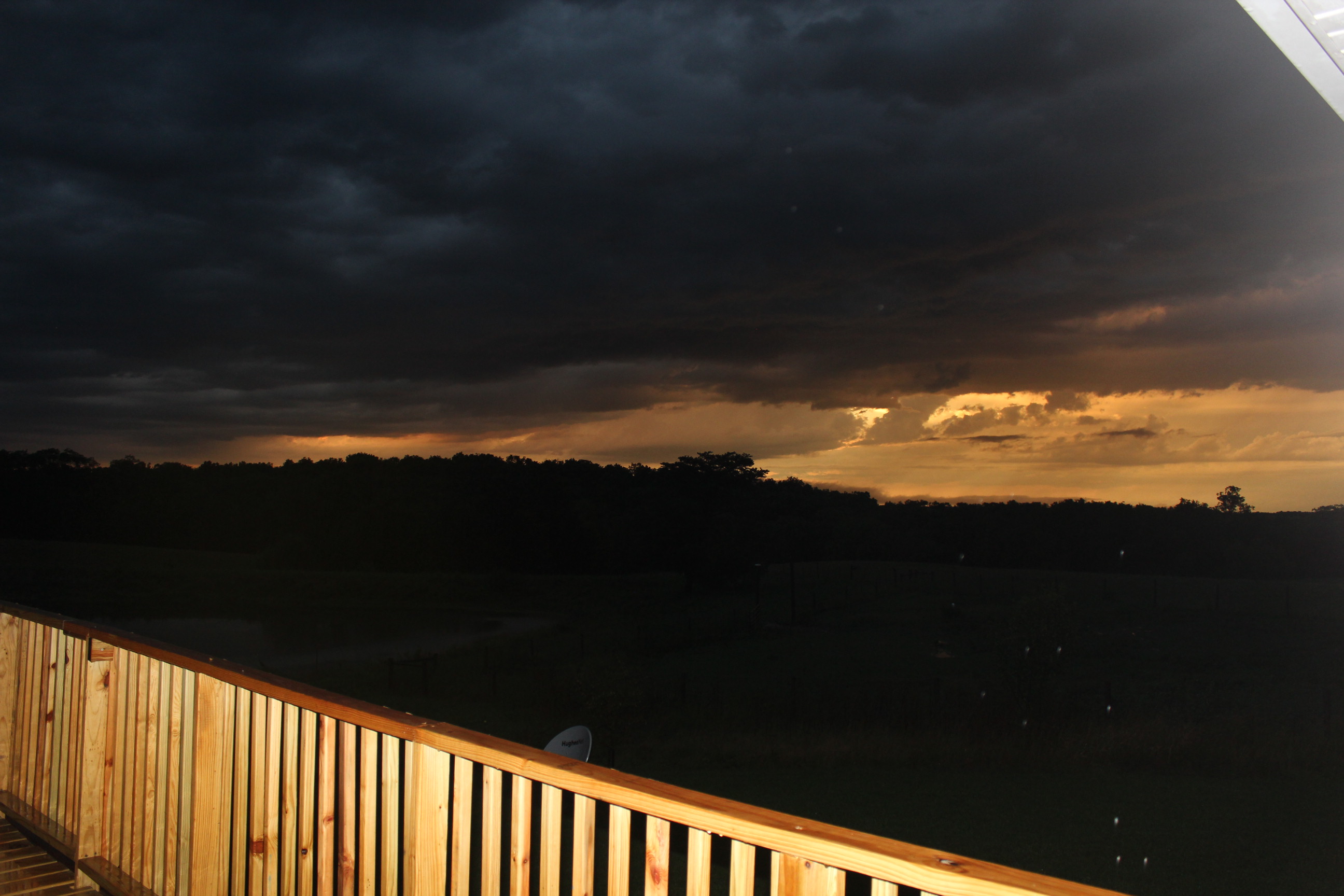
Post mail; 2771 165th Street, Fairfield, Iowa 52556, USA
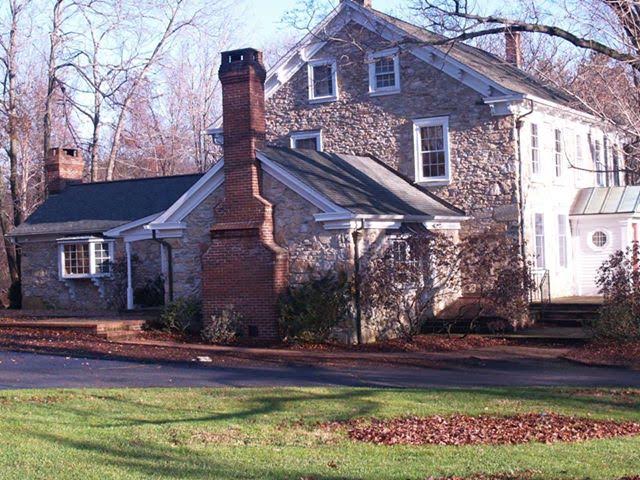


Second Home: 94 Tinc Road, Flanders, NJ 07836, USA

Guangzhou, China Office
Sometimes I’m perceived of as an American, via the ambiguity such allows. Those more seriously doubting my cultural base based on what I teach ask: “From where do you come?” I respond that I’m not really an American, I come from a farm in Iowa. From this I then go off into the importance of diverse cultural, religious, nationalistic and political casts. My concern is more with the important planetary challenges we as global citizens face, then with the ill-formed ideologues that divide humans. Quite simply we are dangerously divided from nature. From this basis it is easy to be divided from each other. As such the teachings of Socrates and Lao tsu lose. Plato and Confucius win, once again.
I was born and raised on a farm in Iowa. From age 8 until 18 my responsibility was to milk an average of 27 dairy cows at 5 AM and PM each day. The rest of the time I was like the person depicted in Bruce Springsteen’s song “Jack of All Trades.”
At 16 I was given the Audubon Society State award for conservation of habitats needed by birds. or doing things in a different way. At 22 I was sent to participate in a war without good cause or leadership as sponsored by smart people lacking any wisdom and filled with hatred.
At 27 I was given the “Scariest Student Graduation Award” by the engineering faculty in my university. At 35 I was given a PhD that I did not desire based on troublesome research on the consequences of uncontrollable environmental deterioration. Including the early warning of climate change no one wanted to hear about it in 1977.
From 28 until 65 I worked with university students at second and third rate schools, while avoiding those claiming to be first rate. In the lesser schools students were more experienced and innovative while the leadership of their universities was was unskilled and looking backward. I was well paid by companies I advised thus I could help many students with their too high tuition costs. At the same time I was passionate about working with women and children that lacked homes and food.
From 65 until 72 I was involved in a small legal dispute with some of the more questionable leadership of a low aspiration university in a no aspiration state. Revelations of the pubic university and the state judicial leadership from five court cases was informative to firms thinking of investing in NJ, but who came to avoid NJ. I continue to advise these foreign firms. They since helped create a foundation for training girls to become 21st Century leaders of another kind.
I have lived in many locations outside the US. I all places I became known for seeing the local limitations, especially ones associated with what was called “culture.”
I’m very interested in the long standing argument between Parmenides (against change) and Heraclitus (for change) in the West and then for Confucian stability and against Lao Tsu movement. Those seeing hope in change are seen as disrespectful to the authorities of the day, be they written or spoken. Some even devote and invest their life in reversing what they see as hundreds of years of change. In all cases those desiring an order of permanence rely on hierarchies of thoughts, actions and objects.
I am problematic for those dedicated to changelessness in I do not accept hierarchy as a necessary condition of any living system, or societal activity. I refrain from any taking of temporary authority to decide the fate of others. I have great sympathy for left with little authority and thus have little voice and no choice. Their plight is best represented in Bruce Springsteen’s fourth song on his 2012 Wrecking Ball album, “Jack Of All Trades.” This goes directly to the societal cost of those using hierarchy to sustain business as usual to its implicit injustice.
I generally get along with with those at the top and those at the bottom. I sympathize with their mutual belief that the best way to keep the pot from boiling over is, in the Socratic sense, simply to stir it. My problems most are with those in the middle, that fear change will send them to the bottom above all things fear any stirring the pot.
As I once said with some sarcasm on a court record, “I will stop telling the truth about people if they stop telling lies about me.” This came after a judge, during a coffee break, had informed me that my greatest problem was I speak with too much clarity,”A bit more ambiguity would allow you to avoid many problems.”
I seem to have a constancy of behavior regardless of location or cultural conditions. I see patterns that connect the same problems in all conditional differences of environment. I see a constancy of human behavior that is hidden under cultural differences. All this seems to obscure the failings in the human project and its direction.
In my language, I see the greatest hope in what might be called the domain of the non-rational. Unlike the rational and its twin, the irrational, it accommodates and even allows appreciation of all differences, including the psychological, intellectual, societal, universal and natural. The non-rational seems to be the base camp for 90% of human operations. I’m intrigued with jointly finding ways to accommodate the resources of the non-rational to repair the limits of the tightly organized rational, and its worlds of reason. This may well open up the reservoir of resources needed to survive the future of our species. This need not be seen as a threat to those who rely on the contradictions business as usual. In fact, it is less fearsome then retention of the usual.
Humans, at least those Ivan Illich talks about being educated in Nazi Germany, are mostly taught behaviors to preserve stability via doing the wrong thing and finding ways to do it ever more efficiently. Where the contradictions of this approach seem especially perverse, and unsettling, they are told, in the words of Governor Christie of New Jersey, to simply “…sit down and shut up.”
What people like Christie pose as overtly rational is instead terribly humorous and goes on to generate highly irrational feelings in those who “do not get it.” As our environments become ever more endangered by the limited rationale of limited thinkers, like Governor Christie, the irrational arises to places beyond the Middle East.
With time it becomes clearer that there is great potential in what we might come to call the non-rational. It seems quite powerful seen in the light of all resources expended to criticize and avoid it. Herein the non-rational includes the domains of: politics, poetics, aesthetics and religions. Using simply minded rationalizations to avoid or disregard them seems to fuel many of the human conflicts and threats to human survival. Out of the dust of this conflict we see the forces of the irrational that we move to call the crazies. In fact, with out limiting an limited rationales, we have created the crazies in our worlds. They are simply the byproduct of our limited and tightly-maintained rationality. Via the worlds of the non-rational occupants see things that others do not, and having no language for what they feel they become increasingly frustrated, and thus irrational. They occupy a separate reality.
Via the enduring tradition of mismanagement, via decisions made within the limits of restricted rationality, things do not seem to go well. This is seen in the many organizations I’ve work in, with and for. I’m sorry to say that I have been fired from all organizations I’ve been employed in as a worker. Perhaps my humor was not to be appreciated? I had trouble effectively explaining the world of teh non-rational. My call to dip into the value and values of the other 90%, called the non-rational, was very ineffective with middle management mentality.
The time is approaching when a single individual, with a small piece of very powerful technology, will be able to use the logic of the irrational, fueled by the anger created by the misplaced rational, to bring the species to an end. This is the ultimate irrationality that increasingly defines the future of our species.
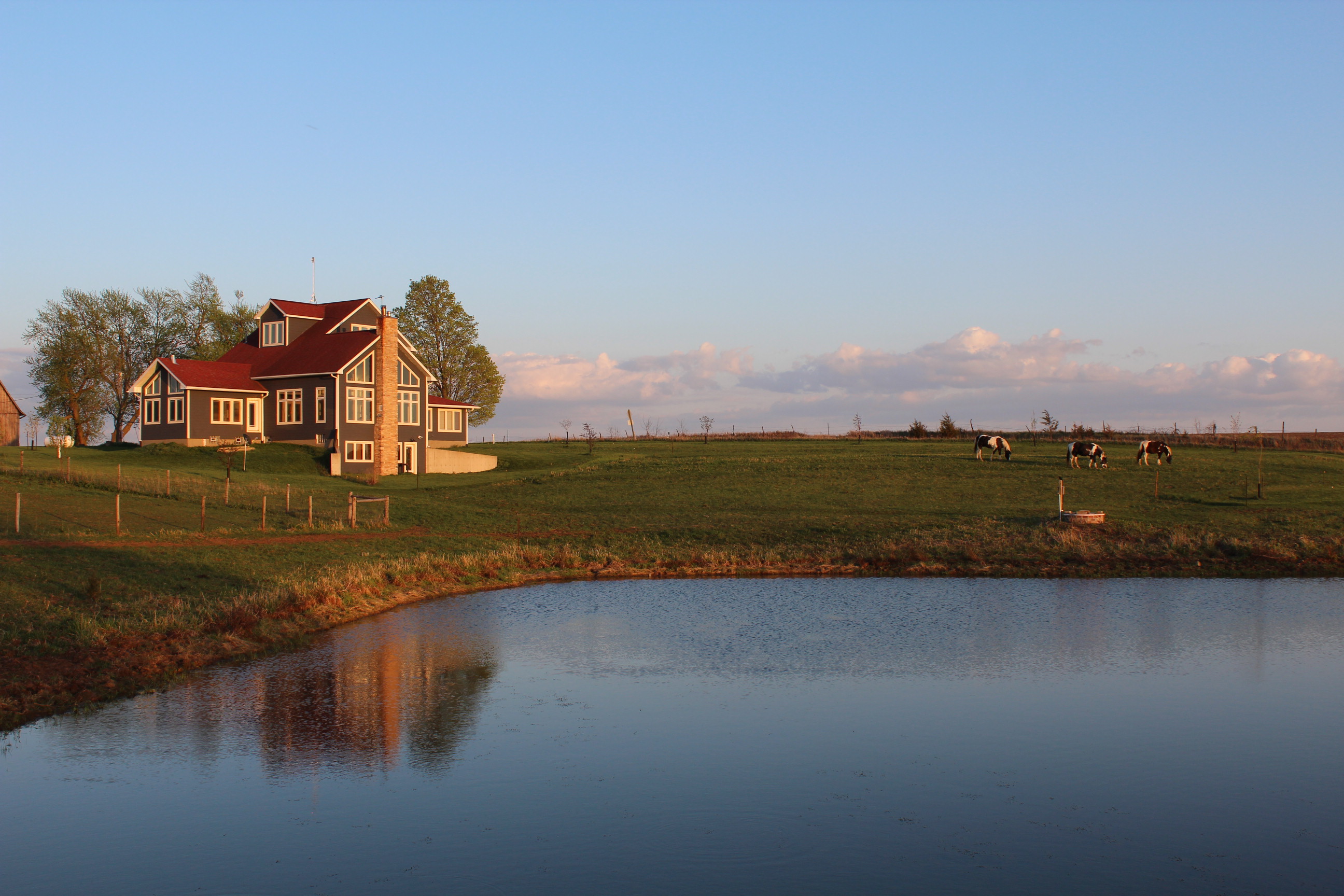
We are coming to occupy a new kind of world, defined by a very different set of conditions. We urgently need all the help we can locate and include in our efforts to manage this situation. As a demonstration of this I have allowed the construction a corporate rehabilitation center in Iowa. It’s result is mostly to provide a stage set to hold discussions via reflections on to where the human journey is headed. From this we discuss what interventions might be needed, and are such interventions even possible.
It demonstrates the will to exceed in all things human once the individual is given the opportunity to define and demonstrate success. Based on careful studies to determine what was most essential to a building program it was determined that design, management, budget, timetables and enforcement were essential to success. Thus, all these were eliminated in the process. No plans, designs, budgets, regulations, functions and knowledge of what must be done were allowed on the site. Two men who had been limited to building other people’s limited plans and a young woman, who promised to know nothing about construction, being the official project manager, created the facility. It is unusual, has an unusual impact on those who meet there, and cost about 60% of normal construction of the time. Its result is 2″x6″ construction, triple paine windows and geo-thermal heating and cooling that cost a fraction of normal operating expense. The carpenters had not previously been hired to build anything but two story boxes on the Iowa landscape.
Below is an image of what they built via more personal restrictions, and human potentialities.

Hi Nishat, I’m good, but how are you. Jonas just called me to say you had an accident. Is it bad? He wants to hear from you prior to a party he is going to where there is a CEO of a computer company that might be interested in your work. Please contact him.
David